
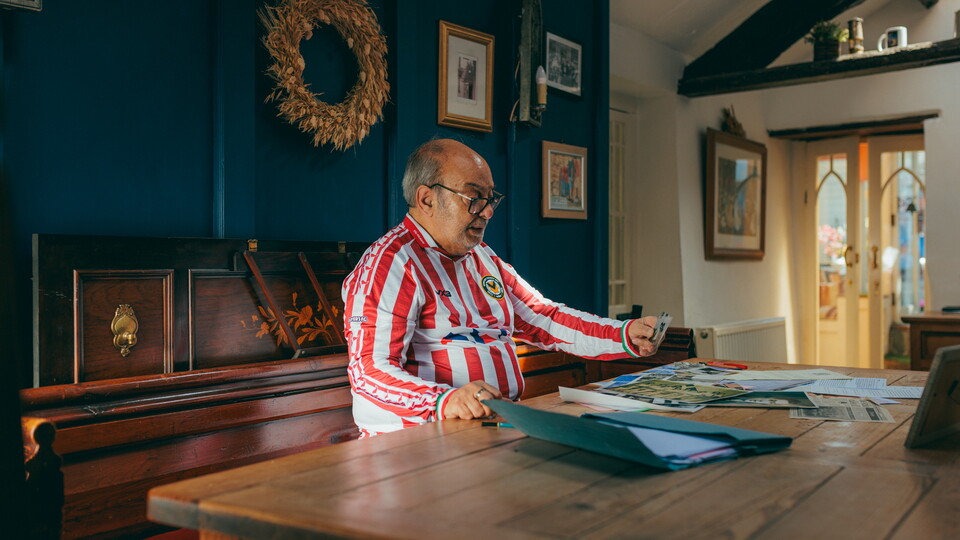
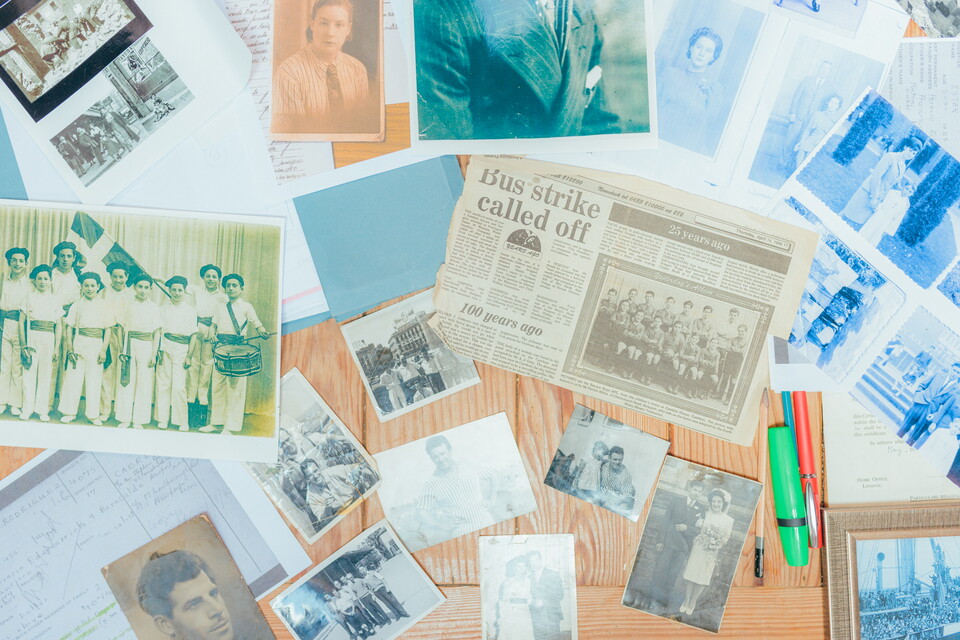
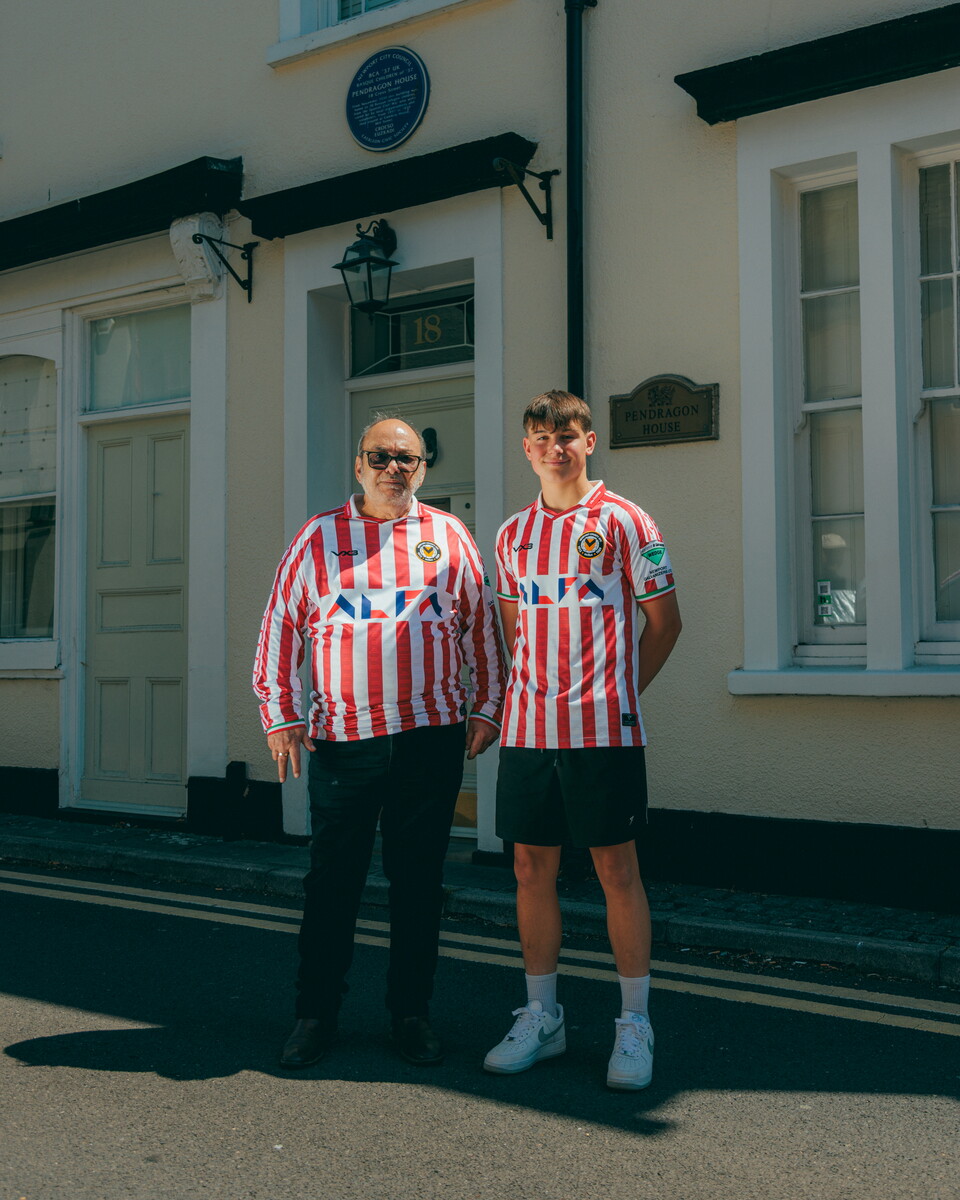
Looking through the collection of old photographs and newspaper cuttings on the kitchen table at Pendragon House in Caerleon, the emotions and memories came flooding back for Stephen Benavente.
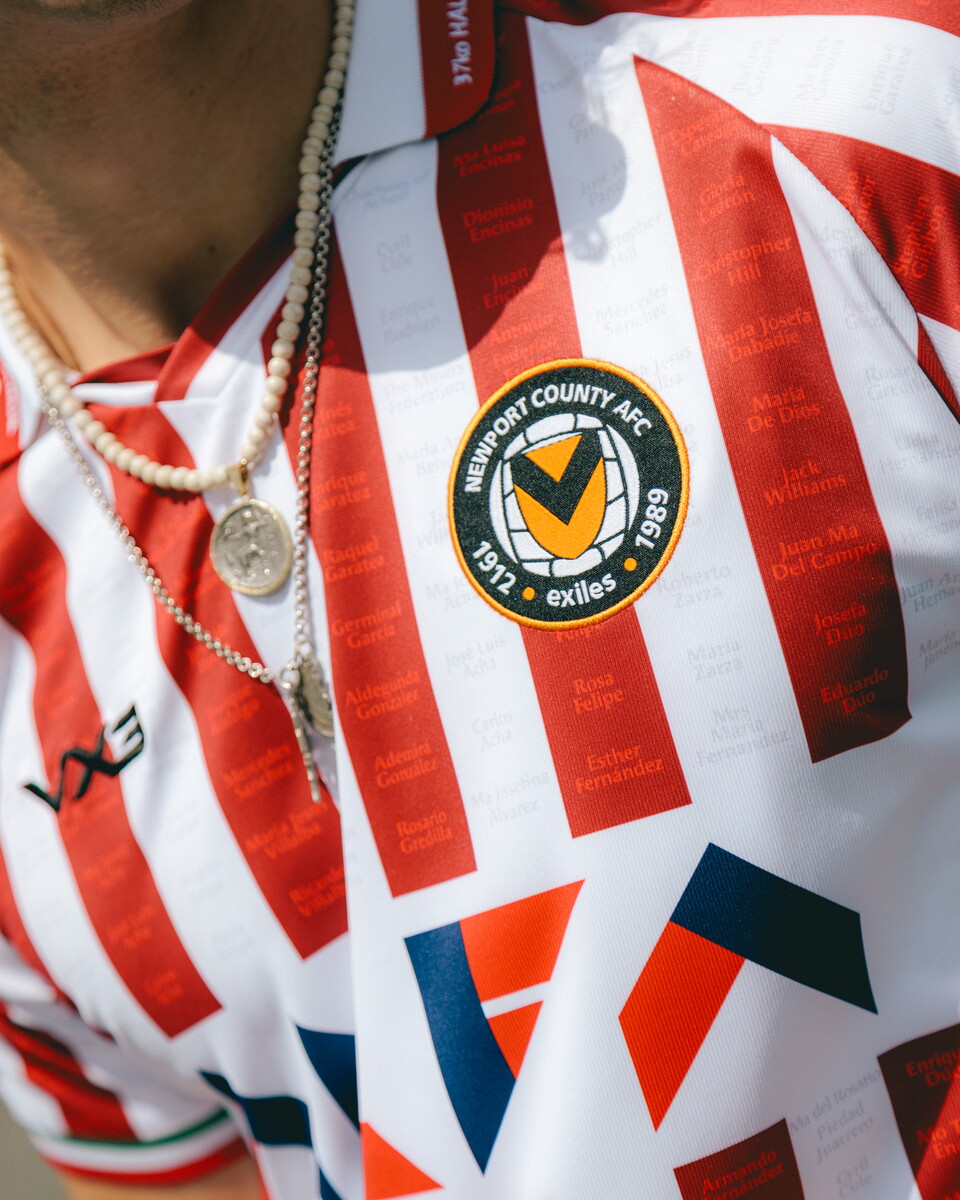
The cameras had descended on the archaeologically import town, situated on the banks of the River Usk and five miles from Newport city centre, as part of Newport County’s launch of a new away kit for the upcoming League Two campaign.
Red and white stripes are not colours normally associated with the Exiles, although the club did sport the same colours as its first kit in the mid 1930s, but on this occasion the story had every right to take the lead in a unique collaboration with Athletic Club Bilbao, VX3 and Lovers F.C.
It’s a story that not too many people were aware of in and around Newport, let alone the rest of Wales and beyond its international borders.
On March 31, 1937, fascist bombers serving Francisco Franco razed the Spanish towns of Durango and Elorrio, killing hundreds of civilians.
It was during the time of the Spanish Civil War and marked the beginning of an indiscriminate and brutal aerial assault that continued almost daily for more than two months. The strikes were carried out by the Aviazone Legionaria, together with 30 bombers and 44 fighter planes from the Nazi Condor Legion.
The most severe bombardment took place in Gernika, devastating the town and taking hundreds of innocent lives in the process.
During the following weeks, Bilbao and the surrounding area suffered constant bombing.
As a result, on May 21, 1937, a total of 4000 of children were forced to leave Bilbao on the SS Habana bound for Southampton where, on arrival, hundreds made a further journey to Wales. Many found safety, love and care in Caerleon.
“One of those children was my father Andres,’’ explained Stephen Benavente, who spent 30 years as head of Music and Performing Arts at Fairwater High School in Cwmbran. “He had found refuge in Caerleon, Newport. He arrived aged 12 or 13 with no family, scared and far from home.
“He lived a completely different life from what he had known before. He was a quiet man, so didn’t share many stories of what it was like in Bilbao when the unthinkable happened in 1937.
“It left the children that were saved in tatters. Even after they were sent to Britain as refugees, they never recovered totally from the bombing they experienced.
“Language was obviously a huge problem for him, and he struggled for many years here. And when he met my mother six or seven years later, she was of Italian descent, so it wasn't easy for them trying to communicate. My mother’s family was all Italian as well, so he was hitting a brick wall really in many ways.
“He was a kid when he got to Britain, and he did what kids do. He'd wanted to play football, he wanted to enjoy himself.
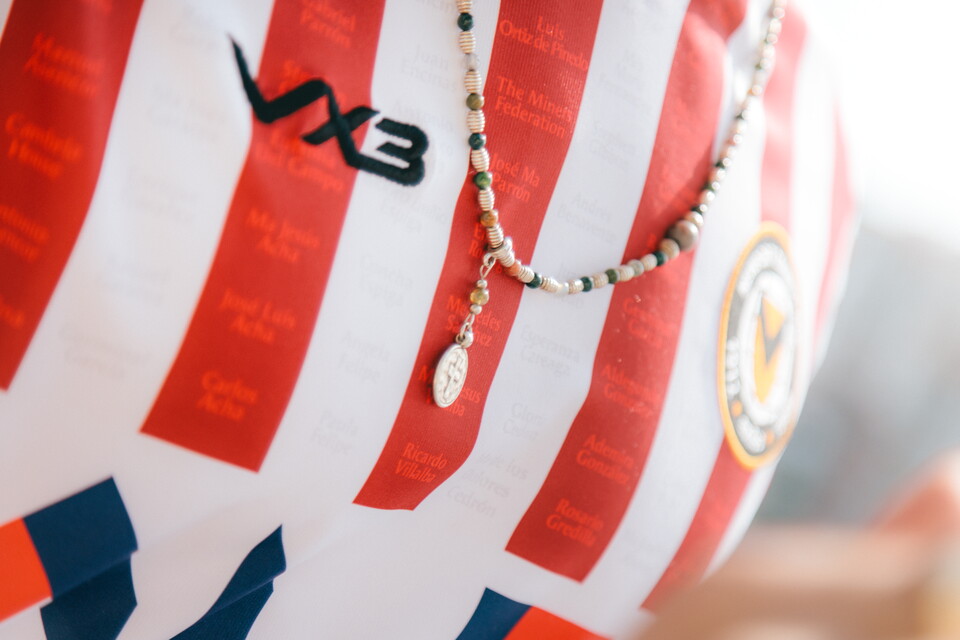
“My father was eventually fostered by a Mr Gibbon as his own father, my grandfather, had been executed by the fascists in Spain and we never knew what happened to his mother who had been a sardine seller on the streets of Bilbao. We still don’t.
“Mr Gibbon was a fluent Spanish speaker, which was ideal. He was also a mad keen footballer and was the one that coached the team – the Basque Boys FC.’’
In fact, the team was so good it gained recognition and toured across Wales and often referred to as the ‘Basque Unbeatables’. Some of the team members even went on to become professional footballers in Spain in later life.
It still wasn’t easy for his father though, or the other child refugees. Shortly after World War II began, the military moved into Cambria House, where they were being housed, and the Basque children were moved to Mill Street. This was a far smaller house; the move was only possible as some of the children returned to Spain and others were placed in private homes. No sooner had they made Vale View their home than the military took this over as well. The children then squeezed into Cross Street – now Pendragon House.
They were cared for by local organisations and volunteers from the community, and there is now a special blue plaque adorning the house in memory.
“My father eventually married and became a gardener in a hospital, then a manual labourer and was later in charge of a group of men who were working in the steelworks,’’ added Stephen, a renowned composer and choral director for choirs in Gwent, including the popular Priory Singers.
“Sadly, he died when he was 46 of a heart attack. He went through the Civil War, getting used to living in Newport, not speaking the language, trying to experience new jobs, new people, colleagues and friends. And then when he became successful in certain areas, someone upstairs decided to tell him his time was up when he was just 46. It was a terrible, terrible trial for him, his wife, my mother and our family.
“I’m still very proud of him. He was a great, lovely man. Everyone that knew him admired him for his way of life, his sincerity.
“He had found refuge in Caerleon. He arrived with no family, scared and far from home, but the people of Caerleon and Newport devoted their lives to the kids and I will be eternally grateful to them.
“Newport gave him a second home and a second chance. The world tried to take everything from him. But Newport gave him a future.
“Now, because of him I carry both places in me - the rhythm of the Basque mountains and the echoes of South Wales.’’